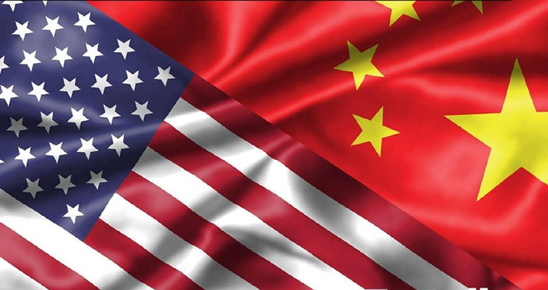
Football is a global obsession, but in two of the world’s most powerful nations, China and the United States, the sport has historically taken a back seat. However, both countries are now determined to change that. As U.S. President Biden remarked, "We have our Super Bowl, World Series, NBA Finals, March Madness, but nothing compares to the World Cup." This sentiment is not unique to Biden; both nations are vying to dominate the world's most popular sport, each in its own way.
China has launched a state-driven plan aiming to win the World Cup by 2050, while the U.S. is leveraging its financial might to influence the game. Americans now own nearly half of the Premier League clubs, and the trend is similar in Italy. After competing for global dominance in technology, trade, and political systems, it seems these superpowers are now bringing their rivalry to the football field. This prompts the question: why are Americans buying European football clubs?
The term "new cold war" might seem exaggerated, especially when we're talking about sports. Yet, during the original Cold War, sports played a significant role. While the U.S. faced off against the Soviet Union in the 1980s, the phrase "new" or "second" Cold War is often used to describe current tensions between the U.S. and China. Football, much like other areas of geopolitical competition, is becoming another arena where these tensions manifest.
Russia, through its state-owned energy company Gazprom, has demonstrated how football can be used for political influence. Millions were poured into sponsorships to gain public acceptance for pipeline projects and to make Europe, especially Germany, dependent on Russian gas. The beginnings of what some might call "football as war" are clear. Should we be concerned that the leaders of the two most powerful nations are now engaging with the FIFA president? Not really, as neither country’s national teams are yet a threat on the pitch.
China's struggle with football can partly be blamed on communism. Under Mao Zedong, the country was isolated from the sport’s growing global popularity. Even after Deng Xiaoping opened up the country, playing football was difficult due to regulations requiring official sanction for gatherings of ten or more people. While the Chinese claim they invented football, today it is neither widely played nor particularly well. Yet, the Chinese government is determined to change this, with a plan to make the country a football superpower. Since President Xi announced the plan in 2014, international stars were drawn to the Chinese Super League, and Chinese investors began buying European clubs. This was all part of the Communist Party’s strategy to influence global geopolitics through football. However, the government later shifted its focus back to the domestic market, leading to the sale of more than half of the 20 European clubs that were once Chinese-owned.
Who took over from the Chinese? U.S. investors. In just five years, American investors have come to dominate European football. To understand why, one must look at the U.S. and its complex relationship with soccer.
The history of football in the U.S. is long and complicated. The first peak came in the 1920s with the American Soccer League, which at times paid higher wages than top European teams. However, corruption and power struggles soon ended this golden era. Following this, the sentiment in America was that sports not involving the hands were "commie sports" played by Russians, Poles, Germans, and other so-called communists. The arrival of Pelé to the New York Cosmos briefly changed perceptions, but this didn’t last, as the North American Soccer League soon folded.
When America hosted the World Cup in 1994, it was thought that football was finally on the rise. However, Major League Soccer (MLS) failed to capitalize on the momentum. Various significant events, such as the U.S. reaching the World Cup quarter-finals in 2002 and David Beckham signing with the LA Galaxy in 2007, were seen as potential game-changers, yet none managed to significantly boost the sport’s popularity.
Today, some things remain unchanged, including the rhetoric of a cold war. However, there are also examples of American success in football, like Christian Pulisic winning the Champions League, the U.S. Women’s National Team securing multiple World Cups, and the U.S. Men’s National Team winning the Gold Cup. Football in the U.S. seems to be enjoying a renaissance, and FIFA is keen to fuel this by awarding the 2026 World Cup to the country. However, American football seems to be following the same boom-and-bust cycles that have defined its history.
To fully grasp the current situation, we should consider the influence of cinema. During the 1970s, 80s, and 90s, U.S. box office hits like Rocky and Grease were steeped in Americana, portraying a culture where there was little room for anything foreign. Introducing football, a sport perceived by many as un-American, into this patriotic environment was a challenge. Although the arrival of Pelé and the World Cup gave the sport a boost, the effects were short-lived.
Statistics show that football has struggled to maintain momentum in the U.S., partly because American audiences have treated it like a passing spectacle rather than a permanent fixture. For many, football’s biggest problem was that it didn’t fit the image of an American sport. As Frank Deford of Sports Illustrated remarked in 2001, "The reason we don’t care about soccer is that it’s un-American. It’s somebody else’s way of life." But with U.S. culture changing, football may not need to fit this traditional image.
Modern U.S. audiences are increasingly embracing foreign media, including sports, thanks to platforms like YouTube and Netflix. This shift in cultural tastes has caught the attention of American investors, leading to a power shift in world football. Today, there are more American owners of English football clubs than there are American players in the Premier League. While Chinese investors have refocused on their domestic market, U.S. investors are hungrier than ever for European football assets. So, why are so many Americans buying football clubs? There are three main reasons:
1. Profit Potential: Investors buy a famous club, hope it wins titles to break even, and let inflation increase the club's value before selling.
2. Content Creation: Clubs like Venezia, Fiorentina, or Wrexham are trying to build entertainment brands. Who better to lead a content strategy than Hollywood actors? The emotional highs of winning trophies and the lows of relegation create compelling stories that appeal to American audiences.
3. Investment Opportunities: American investors see European football clubs as undervalued assets that can be flipped for profit. Shut out of the high valuations of American sports teams, they’re pouring capital into the European market, driven by low interest rates and broadcasters' appetite for live sports.
However, there is one significant misunderstanding among many American owners: the belief that there is untapped value in European football. As Jordan Gardner, owner of Danish club Helsingør, said, "Unless you think all the people who’ve been running football clubs in the past were idiots, there isn’t much hidden value left to unlock." Thirty years ago, European football as a whole generated less revenue than the MLB, NFL, or NBA. Today, it generates more than all three combined, much of that growth coming from adopting U.S. methods. But this also means that much of the potential American investors are betting on might already have been realized.
To most football fans, supporting their club is about loyalty and passion, an aspect of their identity. This perspective clashes with the portrayal of fans as mere consumers of a product. So, where does that leave us?
Football is already a truly global sport, but now the two superpowers have realized its potential. While China is trying to build a World Cup-winning team through a top-down approach, the U.S. is changing its relationship with the sport. Instead of distancing itself and labeling it as communist, the U.S. is now trying to use football as a medium to spread its ideology or, at the very least, to make money which some might argue is the same thing.
Perhaps American investors should take a page from David Beckham’s playbook. Instead of attempting to impose his ideas on football, Beckham created a club that genuinely represents the Miami community and their relationship with the sport. Nobody personifies the marketability of football better than Beckham. He shaped the Galácticos era, boosted the MLS’s image in the U.S., and even served as an ambassador for football in China.
Ali Amadghous
Football Management Expert